You missed a step. Or a lyric. Or the slide you’d built the whole argument around.
And in that moment it feels enormous. The whole performance shrinks to that one error. Your stomach drops. Your face wants to do something. Your mouth wants to say something.
“Sorry.”
“Oh, wrong slide.”
“Let me just go back for a second.”
Stop. Right there.
Before you say it, ask yourself one question. Who in this room actually knows that anything went wrong?
You’re the only one with the plan
You walked in with a plan. The choreography. The setlist. The script. The order of your slides. The story you were going to tell and the exact moment you were going to land the big line.
So you count every deviation. The late turn. The half-beat. The sentence you skipped. The example you forgot. You notice all of it, because you’re comparing every second of what’s happening to what was supposed to happen.
The audience doesn’t have the plan.
They don’t know the choreography. They don’t know the original lyric. They never saw your speaker notes. They have no idea that the case study on slide eight was meant to come before the numbers on slide seven.
The keynote speaker knows the joke was supposed to come before the story. The pianist knows the tempo was meant to be slower. The founder knows the demo was supposed to open on a different screen. Nobody else does.
They only see what you show them. Nothing more.
If you keep moving, there was no mistake. If your face drops for one second, now there is.
Your harshest audience is the one counting errors from inside your own head.
“Sorry, wrong slide”
Watch what happens in a business presentation.
You click forward and the wrong slide comes up. Or you realize you skipped the key point a few minutes ago. And you say: “Oh, sorry, that’s the wrong slide.” Or: “Actually, I meant to show you something earlier.”
In that moment it feels like honesty. Like the polite, professional thing to do.
Now look at it from the other side of the table. Before that sentence, nobody knew. They thought it was the next point. They were following your logic. After that sentence, they know you’re off-plan. And now they’re watching for the next slip. They’re watching your execution instead of your message.
And so are you.
That one sentence costs more than the wrong slide ever did.
Most mistakes in presentations aren’t made. They’re announced.
Same on stage. The actor who drops a line and says the next one with full conviction: the audience hears a scene. The actor who drops a line and freezes, eyes flicking to the wings: the audience hears a mistake. Same missing words. Two completely different nights in the theatre.
And the cost doesn’t stop at that one moment. Once you’ve announced it, you start performing carefully. Smaller. Checking yourself. You spend the next ten minutes making sure it doesn’t happen again, and the room can feel you protecting yourself instead of leading them.
When something does need fixing
Some things need correcting. If you gave the board the wrong figure and they’re about to make a decision on it, you correct it. Of course you do.
But watch HOW you correct it. One clear sentence, no drama, straight back into the flow. “The right number is this.” Then keep going. That reads as precision.
The flustered version reads as a loss of control. The apology. The nervous laugh. The “I’m so sorry, I don’t know what happened there.”
Same information. Completely different impression.
The fact gets corrected either way. Only one version tells the room you’ve lost your footing.
The half-second after
Singers know this. Dancers know this. Speakers usually learn it the hard way.
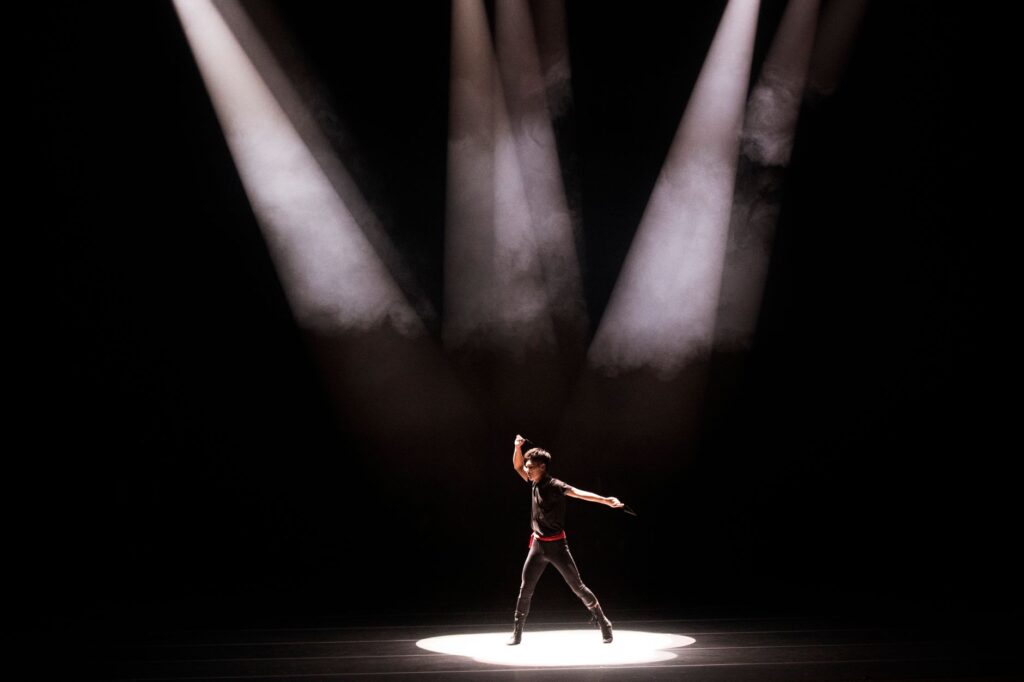
The dancer slips. The singer cracks a note. The speaker loses their line in the middle of a sentence. What happens next isn’t decided in the next minute. It’s decided in the next half-second.
Either the mistake gets a reaction. A wince, a flicker, a pause, a little shake of the head. And then it takes over the performance, because the audience follows your reaction straight into the mistake.
Or it gets nothing. And it’s gone.
Same with the mic that dies in the middle of your keynote. The demo that freezes. The projector that gives up five minutes into the board presentation. Something always interrupts. High performance is never smooth. One person apologizes, flusters, and spends the rest of the talk trying to recover. The other one smiles, steps forward, and owns the room louder than before.
Same disruption. Completely different performance.
And that half-second can’t be improvised. You can’t decide in the moment to be calm about something your whole system is reading as a disaster. It’s built long before you walk on. It’s built inside.
I know this from my own body. When I danced my first ciphers, the improvised circles in kizomba, my legs were shaking. Both times. I had checked beforehand, and I wasn’t nervous. I’ve stood on international stages as a speaker. And my legs shook anyway.
I didn’t fight it. I don’t fight stage fright when I speak either. I let the feeling be there and put my attention somewhere else. In the cipher, I put it on softness, in my frame and in my legs. What gets no attention moves into the background.
That’s what built inside means. No trick in the moment. A place you already know how to put your attention.
So think about your last presentation. Your last performance. Your last important meeting.
How many “mistakes” did you make visible that nobody would have noticed?
How many did you announce?
And what would have happened if you’d just kept going?
We go deeper on this in our free masterclass. Watch it free here: tinaenglisch.academy/webinarhighperformance