You’ve done the work. Years of it.
You know your material better than anyone in the room. You’ve given this presentation, this pitch, this performance more times than you can count. And still, the last time it really counted, something wobbled.
Not the slides. Not the numbers. Not the choreography.
You.
And if you’re honest, you already know that. You just haven’t done much about it. Because every time a big moment comes up, you do what high achievers always do. You go back to the technique. One more revision. One more run-through. One more round of polishing something that was already good.
So let’s ask the question properly. Technique or mindset. Which one decides it?
A hundredth of a second
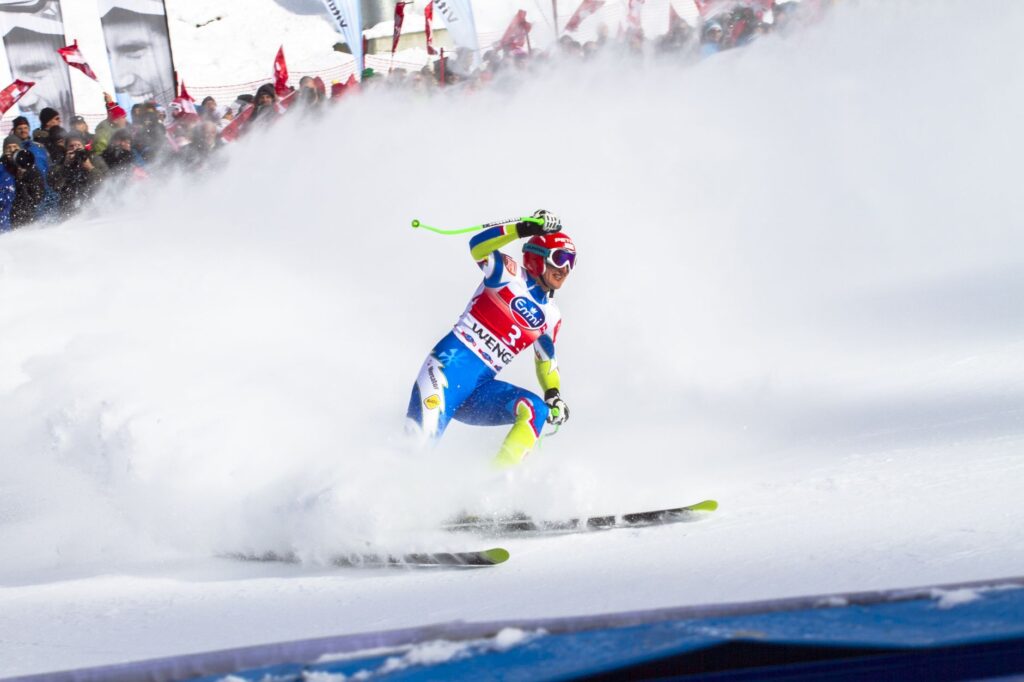
Watch the end of an alpine ski race. First place and second place, separated by a hundredth of a second.
A hundredth.
Both racers have skied those turns more times than they can count. Both know the course. Both have the same equipment, the same quality of coaching, the same years of training behind them. Nobody standing in that finish area lacks technique. You don’t get into the start gate of a race like that without it.
I know that world. I competed as a snowboarder up to World Rank #6. At that level, nobody around you is short on technique. Everyone can ride. That’s how they got there. What separates you on the day happens somewhere else.
So don’t tell me that hundredth is technique.
At that level, technique is the entry ticket. What’s left is the head. Who commits to the line when the body wants to brake. Who hesitates for a blink. Who stays in command for the whole run, and who stays in command for most of it.
Most of it loses.
Golf shows the same thing. Plenty of golfers could hit Tiger’s shots. On the range, on a quiet Tuesday, the best players in the world can all hit remarkable shots. That’s why they’re on tour. What made Tiger Tiger was what happened in his head when it mattered. The final round. The putt everyone was watching. The moment where most players start thinking about the result instead of the shot.
The swing got him there. The head decided what he did once he was there.
Everyone in the final round is good
Now bring that into your world.
The final round of a tender. The shortlist for the C-suite role. The investor meeting after weeks of due diligence. The audition callback. The keynote slot at the conference everyone in your industry attends.
Look around that room. Everyone has the deck. Everyone has the track record. Everyone has the expertise. That’s how they got into the room in the first place.
Good is no longer the question.
And yet this is exactly the moment where high achievers double down on the one thing that no longer separates them. They rewrite the opening slide for the fifth time. They add one more case study. They rehearse the content until they can recite it in their sleep.
Then they walk in, the client pushes back on the second slide, and the person who shows up isn’t the one who rehearsed. The voice gets tighter. The answers get longer. They start explaining instead of leading.
The deck was fine. The deck was always fine.
Where your preparation actually goes
Ask a high achiever whether technique or mindset matters more and they’ll say both. Of course both.
Then look at their calendar in the week before the big moment.
Hours on the content. Hours on the slides. Hours on the numbers. And on the head that has to deliver all of it under pressure? Nothing. Maybe a breathing exercise in the elevator. Maybe a coffee and a pep talk in the car.
Athletes would never prepare like that. In sport, nobody questions mental training. You train the body, you train the technique, you train the head. Nobody calls the third one weakness. It sits in the plan, right next to strength and conditioning.
In business, the same idea makes very successful people bristle. “I don’t need that. I’m performing.”
You are performing. That was never the question either.
The question is what happens to that performance when the pressure peaks. Because pressure shows exactly what you trained. If you’ve only ever trained your content, that’s exactly what the big moment will show you. Strong content, delivered by someone who is no longer quite in command.
What the head does when it counts
So what does “the head” actually mean here? It sounds vague. It isn’t.
It’s whether you commit or brake. The skier who stays on the line through the steep section. The speaker who holds the pause instead of rushing to fill it. The founder who answers the sharp question in one clear sentence instead of five defensive ones.
It’s whether your state belongs to you or to the room. Whether one raised eyebrow at the end of the table can change how you speak. Whether the person who presented before you, the one who got the laugh, the one who got the applause, is still in your head when you stand up.
It’s whether a mistake stays small. The missed step. The wrong slide. The number you had to correct. Whether you keep moving or let it run the next ten minutes.
None of that is technique. All of it can be trained. And at the top, all of it decides.
So be honest
Think back to the last time it really counted. The pitch. The keynote. The final. The meeting where the decision was on you.
When something wobbled, what was it?
Was it your skill? Did you suddenly forget how to do your job? Did you lose years of expertise somewhere between the elevator and the meeting room?
Or was it your head?
You’ve invested years in your technique. YEARS. What have you invested in your head?
We go deeper on this in our free masterclass. Watch it free here: tinaenglisch.academy/webinarhighperformance