
You knew you’d win.
You’ve closed this kind of deal a hundred times. You know the room. You know the objections before they come. You know the exact moment they’ll lean back and say yes. So this time you prepared a little less than the others did.
Why wouldn’t you? You didn’t need to.
And you won. Again.
Your team was impressed. Again. Someone said “you make it look so easy.” And on the way out, walking to the car, something was missing. The win felt thin. Shallow. Like you got away with it instead of earning it.
Nobody names this. Everyone around you sees the result. You feel the emptiness.
That’s the problem.
Winning on routine
The shallow win doesn’t happen to people who struggle. It happens to people who are good. Very good. Good enough to win on reputation, routine and talent while everyone else in the room is working harder.
The senior partner who walks into the client pitch with a handful of slides and beats the competitor who brought a full binder. The executive who closes on instinct. The speaker who doesn’t rehearse anymore and still gets the applause. The expert who could give this talk with their eyes closed, and pretty much does.
From the outside, that looks like mastery. And partly it is.
But you know the difference. You know when you showed up with everything you have, and you know when you showed up with what was enough. Enough to win. Not enough to mean anything.
The natural
Sport has a name for this person. The natural.
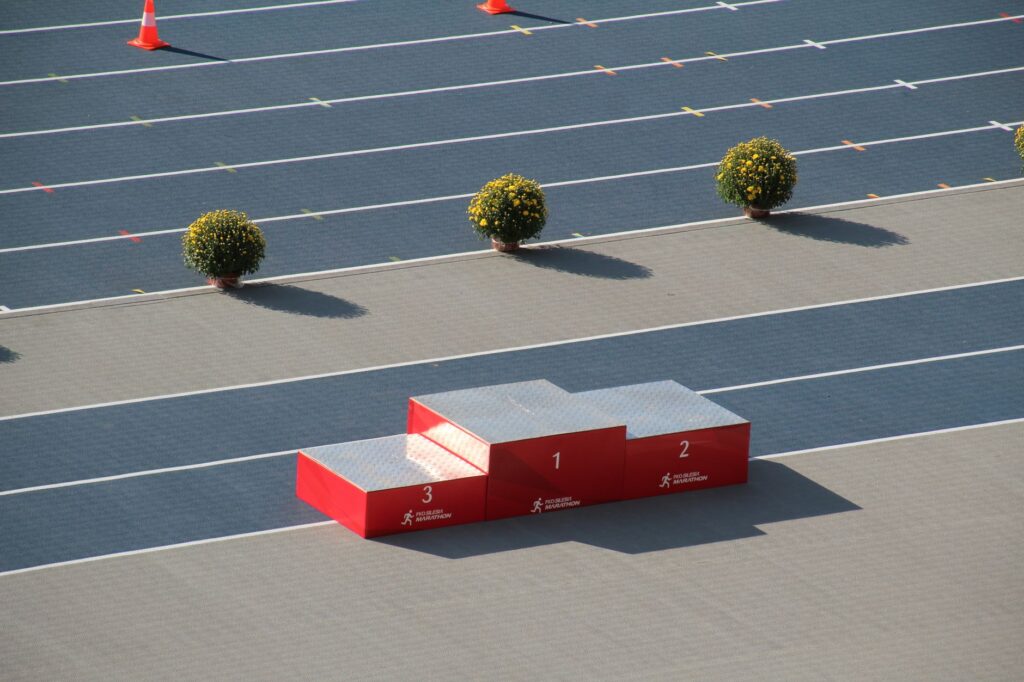
The one who didn’t need to train as hard. The one who showed up on competition day and took the podium anyway. The coach is proud. Everyone talks about the talent.
For a long time that feels like a gift. A victory on top of a victory: you won, and you didn’t even have to fight for it.
Then, over time, something shifts. The wins keep coming, and they start to feel lighter. Like there’s a version of you that nobody has seen yet. Including you.
Talent let you win. It also let you skip the part where winning means something. The part where you put everything on the line and find out what you’re really capable of. The athletes who had to fight for every result went through that part again and again. The natural often never does.
Same on stage. The singer with the gift who coasts through the audition and gets the role. The dancer who picks up choreography faster than anyone in the room and never really has to dig. They get the result. They don’t get what the result was supposed to give them.
Why nobody names it
The shallow win is so hard to talk about because, from the outside, nothing is wrong.
You won. Who complains about winning? Say it out loud and it sounds ungrateful. Arrogant, even. “I closed the deal, but it didn’t feel like enough.” Most people would roll their eyes.
So you don’t say it. You take the congratulations, you move on to the next thing, and you win again. And the pattern gets deeper.
Your team admires how easily it comes to you. Your board admires the numbers. Your audience admires how relaxed you look on stage.
You don’t.
And that private gap between how it looks and how it feels doesn’t go away just because nobody else can see it. It gets quieter. It shows up on the drive home. It shows up when someone asks “how did it go?” and you say “great” a little too fast.
The emptiness is information
We want to be very clear about one thing. The shallow win doesn’t mean something is wrong with you. Nothing is broken. You’re performing.
The emptiness is information.
It marks the distance between what you’ve achieved and what you’re capable of. Your results are telling one story. Something inside you knows there’s another one. A version of that pitch, that keynote, that competition where you actually gave it everything.
High achievers are brilliant at producing results. They are much less good at noticing when a result has stopped costing them anything. And when winning costs you nothing, it gives you nothing back.
So forget winning more. You’re already winning.
When did winning last cost you something?
When did you last prepare like the people who have to fight for it? When did you last walk into a room where you genuinely didn’t know if you’d win, because you were reaching for something bigger than what you already know you can do?
What would happen if you trained like someone who could lose?
You probably won’t lose the next deal. That was never the reason. The version of you that prepares fully, that walks in with everything, that takes the bigger risk instead of the safe one, is the version that finds out what’s actually possible.
The ski racer who already dominates and still trains like the season is on the line. The speaker who has given the keynote a hundred times and still treats the next one as the one that matters. The executive who could close on autopilot and chooses not to.
The result was never the point for them. What the result is supposed to mean is.
So again. When did winning last cost you something?
We go deeper on this in our free masterclass. Watch it free here: tinaenglisch.academy/webinarhighperformance